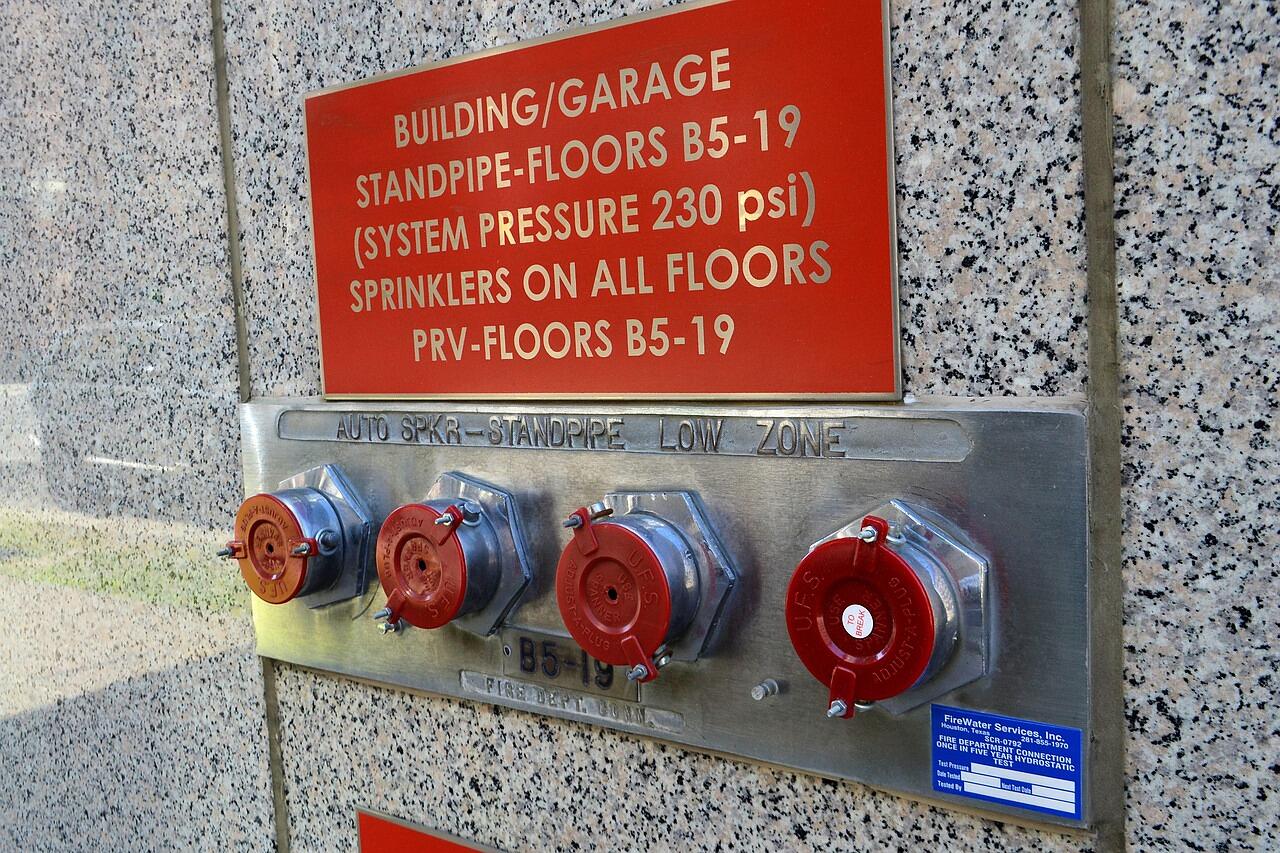
Fire Watch Officers in Orlando
When a fire alarm or sprinkler system goes out of service, NFPA 72 allows four cumulative hours of impairment in any 24 before the authority having jurisdiction has to be notified and a watch has to be standing, and Florida enforces that through the Florida Fire Prevention Code. Nexus Security Firm staffs that watch with licensed Florida officers and keeps the dispatch desk answered at every hour.
- A watch standing in hours
- FDACS Class "B" agency license B 1900066
- Dispatch answered around the clock, every day
Fire watch coverage in Orlando
Six situations account for almost every fire watch call that reaches this desk, and each one has a different deadline attached to it. Pick the one that matches what is out of service at your building.
Fire Alarm Impairment Watch
A fire alarm system out of service for more than four cumulative hours in any 24-hour period puts the building into AHJ notification and a fire watch under NFPA 72, which Florida enforces through the Florida Fire Prevention Code.
Learn more →Sprinkler Impairment Watch
A closed riser, a fire pump out of service or a drained wet system removes the suppression the building was designed around, and the authority having jurisdiction and your insurance carrier both expect a documented watch for the whole outage.
Learn more →Hot Work Fire Watch
A hot work permit puts a named fire watch on the job before the torch lights and keeps it there after the work stops, because most hot work fires start in the material behind or below the work and show themselves long after the welder has left.
Learn more →Construction Fire Watch
A building under construction has the combustible load of a finished structure and none of the protection, because the sprinklers are not commissioned, the alarm is not accepted and the standpipe is chasing the top floor.
Learn more →Storm and Power Outage Fire Watch
A fire alarm system running on flat batteries is an impaired system, and the four cumulative hours NFPA 72 allows in any 24 are counted the same whether the cause was a failed panel board or a hurricane.
Learn more →Condo Recertification Fire Watch
Milestone inspection repairs reach balconies, risers, corridors and stair cores, which means the fire protection comes out of service floor by floor while every resident stays in the building.
Learn more →What brings buildings to a fire watch
Nobody shops for a fire watch. Something has gone out of service, somebody with authority has said so, and there is a clock on it. These are the six ways that conversation usually starts.
-
The monitoring center calls in the middle of the night
A panel drops into trouble, the monitoring center calls the number on file, and the system stops annunciating. From that moment the NFPA 72 clock is running: more than four cumulative hours of impairment in any 24 and the authority having jurisdiction has to be told and a watch has to be standing. Florida adopts that standard through the Florida Fire Prevention Code under Chapter 633. Most people who call this line at 2am are somewhere inside those first four hours and want to know who can be posted before they run out.
-
Scheduled testing takes the system offline for the day
Annual inspection, a panel replacement, a device sweep across twelve floors: the system comes down on purpose and goes back up when the technician finishes. Planned impairments are the easiest ones to cover, because the start time is known a week ahead, and they are the ones people forget to plan a watch for. If the work will run past four cumulative hours inside the 24, the AHJ notification and the watch belong on the same schedule as the technician. The testing contractor is usually the one who tells the building this.
-
A hot work permit needs a watcher before the torch lights
Welding, cutting, grinding and torch work on an occupied property runs under a hot work permit, and the permit names a fire watch. OSHA's welding, cutting and brazing standard requires combustibles inside 35 feet to be moved or shielded and a fire watch to be held for at least half an hour after the work stops (OSHA 29 CFR 1910.252). On an Orlando hotel roof or in a hospital corridor, that means an officer standing by with an extinguisher while the contractor works, and staying behind after the contractor packs up.
-
An inspection produced a correction notice with a date on it
A fire marshal walks a building, finds a system out of service or a deficiency that leaves it unreliable, and writes it up. The notice is the deadline. Until the repair is finished and accepted, the building either closes, evacuates the affected area, or runs a fire watch, and the watch is the option that keeps the doors open and the tenants inside. Buildings in this position need the watch standing before the next occupied shift, and they need a written round log that shows the inspector exactly what was covered and when.
-
The insurance carrier wants a watch before it releases the impairment
Carriers run their own impairment programs, and most of them want notice before a sprinkler or alarm system is taken out of service, plus a documented watch for the whole time it is down. A carrier requirement can be stricter than the code requirement, and it is the one that decides whether a loss during the outage gets paid. When the carrier's impairment form asks who is standing the watch and under what license, the answer it wants is a licensed Florida agency and a number it can look up for itself.
-
A recertification or renovation project pulls systems out in stages
The milestone inspection program Florida adopted after the Surfside collapse has put a large number of Central Florida condominium and multifamily buildings into structural repair at the same time. That work reaches risers, standpipes, alarm wiring and devices, and the systems come out of service floor by floor while residents keep living in the building. Those watches run for weeks on a schedule the general contractor sets, and they need the same coverage at 3am as at noon, because the code does not care what time the crew went home.
Why buildings hire this agency for the watch
A fire watch is the easiest security job to sell badly. The officer is alone, the shift is often overnight, and the only evidence the work happened is the log, so the three things below are where the money goes.
Officers licensed under Chapter 493, with numbers you can check
Every officer posted on a watch holds a Florida Class "D" license, and the agency holds FDACS Class "B" license B 1900066. Both are public record and the Division of Licensing runs a free lookup, so a risk manager or a fire marshal can confirm the agency and the individual without asking us for anything. Any agency quoting a watch should give you its license number in writing before you sign, and ours is published openly.
A Florida Class "D" license requires 40 hours of FDACS-approved training (FDACS Division of Licensing).
A supervisor is assigned to the post and attends it overnight
Every watch is assigned a supervisor who is responsible for relief, for the log, and for physically attending the post while the watch is running, including on the overnight shifts. Continuity is what fails on long watches. Security industry turnover reached 77% in 2024 (ASIS International), so the question of who covers the 3am hole when an officer calls out is worth putting to anybody you hire, and worth getting answered before the first shift instead of after the first gap.
Industry turnover hit 77% in 2024, up from 69.3% in 2019 (ASIS International).
We explain what moves the rate before you commit to hours
A fire watch is priced by the hour, by how many officers the building needs to cover a round in the time your AHJ expects, and by how much notice there is. Central Florida unarmed coverage runs roughly $24 to $34 an hour, built from Florida guard wages of about $14 to $18 and the 1.5x to 2x bill-rate markup the industry uses (Belfry Software, 2026). Overnight hours, holidays and short notice all sit at the top of that band. Where a smaller watch would satisfy your AHJ, we will tell you.
Security bill rates typically run 1.5x to 2x the officer's wage (Belfry Software, 2026).
Tell us what is out of service
Send the building address, what is impaired, when it went down and what your AHJ or carrier has asked for. The dispatch desk is staffed at every hour of the day, and a supervisor will come back to you with the officer count the building needs and the hourly rate that applies to it.
Work out roughly what a fire watch costs in Orlando
A watch is billed by the hour and runs unbroken until the system is back in service, so the length of the impairment drives the figure more than anything else. Five questions, against published Central Florida rate bands.
Rates derive from Florida guard wage data (ZipRecruiter, Salary.com, Indeed, 2026) marked up at the industry standard of 1.5x to 2x the wage (Belfry Software, 2026). A written proposal replaces this with a firm number.
The numbers behind a fire watch
Four figures that decide when a watch is required, who is allowed to stand it, and why Orlando buildings run more of them than most.
- 4 hours Cumulative fire alarm impairment allowed in any 24-hour period before AHJ notification and a fire watch NFPA 72, adopted in Florida through the Florida Fire Prevention Code
- 40 hours FDACS-approved training behind a Florida Class "D" officer license, valid two years FDACS Division of Licensing
- 200 Events a year at the Orange County Convention Center, drawing more than 2 million attendees OCCC / Orange County
- 77% Security industry turnover in 2024, which is why relief coverage is the question to ask ASIS International
How a watch gets standing
Four steps between the call and an officer on a round. The first one takes about five minutes on the phone.
-
Tell us what is impaired and when it went down
We need the building address, the occupancy type, what is out of service, the time it went out, and whether the AHJ or the carrier has already been notified. The time it went out matters most, because the four cumulative hours in NFPA 72 are counted from it.
-
We size the watch to the building
Square footage, number of floors, how many stairwells, whether the impairment covers the whole building or one zone, and how long a full round takes on foot. That decides whether the building needs one officer or several, and it is the number that drives the quote.
-
Officers post and the round log starts
The officer arrives, walks the route with your on-site contact, and begins timed rounds of the affected areas carrying a means of calling the fire department. Each round is entered in a written log with the time and the areas covered.
-
The watch runs until the system is accepted back
The watch ends when the repair is complete, the system is tested and restored, and the AHJ accepts it, and it ends on your instruction. The completed round log goes to you for your own file, your carrier and your inspector.
What to expect
A watch is set up the same way each time, so nothing about the first shift is a surprise.
- A call with a person, at any hour
- A written scope of the post and the hours
- A rate with the factors behind it named
- Licensed officers assigned to the post
- A supervisor who attends the site
- Documentation of what happened on shift
Fire watch questions Orlando buildings ask
The first group is about when the code requires a watch. The second is about who stands it, what it costs and how to check a license.
Get the watch standing
Call with the building address, what is out of service and the time it went out. Dispatch is staffed at every hour, every day, and Nexus Security Firm holds FDACS Class "B" agency license B 1900066 for you to check before you book.