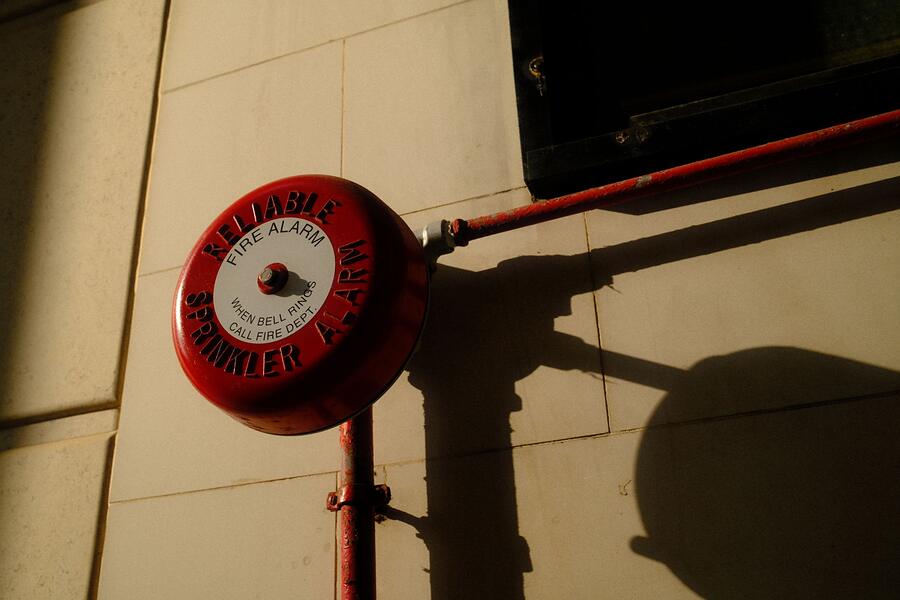
Fire Alarm Impairment Watch in Orlando
A fire alarm system out of service for more than four cumulative hours in any 24-hour period puts the building into AHJ notification and a fire watch under NFPA 72, which Florida enforces through the Florida Fire Prevention Code. Nexus Security Firm posts licensed Florida officers on that watch and keeps the written round log your inspector and your carrier will ask for.
- A watch standing in hours
- Licensed under FDACS Class "B" agency license B 1900066
- Timed rounds logged from the first minute on post
What an alarm impairment watch covers
The watch replaces the detection your panel would be doing, by putting a person on a timed route through every area the impairment affects. An officer on this post has no other duties, carries a phone or radio capable of reaching the fire department directly, walks the route on the interval your AHJ has set, and writes every round into a log with a time against it. On a zone impairment that route is the affected zone plus the areas adjacent to it. On a whole-building impairment it is every floor, every stairwell, every mechanical room and the roof.
The officer is watching for smoke, for heat, for the smell of burning insulation, for a propped fire door, for anything blocking an exit, and for contractors working where they should not be. When something is found, the officer calls the fire department first and your on-site contact second, in that order, and the entry goes in the log either way.
Work out roughly what a fire watch costs in Orlando
A watch is billed by the hour and runs unbroken until the system is back in service, so the length of the impairment drives the figure more than anything else. Five questions, against published Central Florida rate bands.
Rates derive from Florida guard wage data (ZipRecruiter, Salary.com, Indeed, 2026) marked up at the industry standard of 1.5x to 2x the wage (Belfry Software, 2026). A written proposal replaces this with a firm number.
The four-hour threshold and what counts toward it
NFPA 72 sets the trigger at four cumulative hours of impairment inside any 24-hour period, and the word that catches buildings out is cumulative. A technician who takes the panel down for 90 minutes in the morning, an hour after lunch and another 100 minutes in the afternoon has produced a four-hour-plus impairment even though the system was live between visits. Past that line the authority having jurisdiction has to be notified and the building has to be evacuated or covered by a fire watch until the system is restored.
Florida adopts NFPA 1 and NFPA 101 through the Florida Fire Prevention Code under Chapter 633, which is what makes the threshold enforceable here instead of advisory. Two kinds of impairment reach it quickly: a panel fault that nobody can diagnose before a part arrives, and a planned replacement that runs long. A third kind, a supervisory signal that leaves the system partly functional, is worth a phone call to the fire marshal's office before you assume it is exempt.
Who calls for an alarm impairment watch
Property managers and facility directors place most of these calls, usually within an hour of the monitoring center telling them the system is down. The second largest group is the alarm service contractor, calling on behalf of a client whose panel is going to be out longer than the visit was scoped for. Hotels along International Drive, downtown office towers, warehouses on the 441 and Orange Blossom Trail corridors, student housing near UCF and medical buildings in Lake Nona all show up on this line.
What they have in common is that they cannot close. A hotel with 400 occupied rooms is not evacuating over a panel board, and a medical office cannot send patients home for two days. The watch is what lets the building stay open legally while the repair happens, and it is the only one of the three options in the code that leaves the business running.
How the watch is staffed
The officer count comes out of how long one full round takes, measured against the round interval your AHJ expects. One officer covers a single-story building or a small footprint comfortably. A twelve-story tower with two stairwells, a parking podium and a roof plant does not get walked end to end on a tight interval by one person, so it gets two or three, with the route split and the log kept per officer.
This is unarmed work and stays unarmed. Officers hold the Florida Class "D" license, which requires 40 hours of FDACS-approved training and is valid two years (FDACS Division of Licensing). A supervisor is assigned to the watch and attends the post while it is running, including overnight, which is the shift where an unattended watch drifts. On multi-day impairments the officers are briefed on the same route and the same log format so the record reads consistently from one shift to the next.
What it costs and what moves the rate
Central Florida unarmed coverage runs roughly $24 to $34 an hour per officer, and an alarm impairment watch usually prices in the upper half of that. The band is built from Florida guard wages of about $14 to $18 an hour plus the 1.5x to 2x bill-rate markup the industry uses, with officer pay at around 70% of the bill rate and about 10% indirect cost (Belfry Software, 2026).
Four things move your number. Officer count, which follows the floor plan. Hours, since a 24-hour watch is three shifts and an overnight-only watch is one. Notice, because a post filled at 11pm costs more to fill than one booked on Tuesday for Friday. And duration, since a watch running two weeks schedules like a contract and a watch running six hours schedules like an emergency. Ask about the minimum billable shift before you compare two quotes, because that single term explains most of the difference between them.
What Orlando changes about an alarm impairment
Occupancy density is what makes this market different. Orlando took 76.7 million visitors in 2025 and remained the most-visited destination in the country (Visit Orlando), which means hotel and attraction-corridor buildings are close to full year-round and have no low season in which to schedule a quiet outage. A panel failure in a 300-room property in February is a panel failure with 300 rooms occupied.
Jurisdiction matters too. Buildings inside the city limits answer to Orlando Fire Department, while much of the metro around them, including large parts of the tourism corridor, sits with Orange County Fire Rescue, and Seminole, Osceola and Lake counties each run their own fire marshal offices. The round interval and the notification format can differ between them, so the first question on our side is which jurisdiction the building falls in. Hurricane season from June through November adds its own pattern, since power events take panels down in clusters across a metro at once.
How to verify the license before you book
Search the license number, which for Nexus Security Firm is FDACS Class "B" agency license B 1900066, on the Florida Department of Agriculture and Consumer Services public license lookup. The lookup is free and the record is public, so you can confirm the agency status yourself, and your carrier or your fire marshal can run the same search without asking you for anything.
Individual officers hold Class "D" licenses that are searchable the same way. If you are comparing agencies, ask each one for its Class "B" number in writing and run all of them. An agency that will not put the number on a quote has told you what you need to know before the first shift.
Watches that often run on the same building
A building with one system impaired often has another element out at the same time.
How an alarm impairment watch starts
From the call to the first logged round is four steps, and the first one is a five-minute conversation about times and floor plans.
-
The call: what is down and since when
Building address, occupancy type, what the panel is reporting, the exact time the system went into impairment, and whether the alarm contractor has an estimated restoration. That start time is what the four cumulative hours are counted from, so it goes on the record first.
-
Sizing the round
We walk the floor plan with you over the phone: floors, stairwells, mechanical spaces, roof access, and whether the impairment is one zone or the whole system. That produces a round time, and the round time produces the officer count and the quote.
-
Post and log
The officer meets your on-site contact, walks the route once with them, confirms the fire department notification path, and starts timed rounds. Each round is entered in the log with the time, the areas covered and anything found.
-
Handover and stand-down
Multi-shift watches hand over on post with the log in hand so the next officer inherits the route and the open items. The watch stands down when the system is restored, tested and accepted, and the completed log goes to you.
What to expect
While the watch is running, this is what the building sees:
- A licensed Florida officer on a timed route with no other assigned duties
- A written round log with times, areas covered and anything found
- A supervisor attending the post, overnight shifts included
- The fire department called first if anything is found, then your contact
- Shift handovers done on post with the log passed across
- The agency license number available for your notification and your carrier
Why this watch holds up under inspection
The log is written to be read by someone else
A fire watch log exists so a fire marshal, a carrier or a claims adjuster can reconstruct what was covered and when. Times, route, areas, findings, officer name and license, per round. Buildings get the completed log at stand-down and can hand it straight to whoever asked for it, which matters most when the impairment sat over a weekend and the questions arrive on Monday.
The Florida Fire Prevention Code, adopted under Chapter 633, is what makes the watch enforceable here.
Relief is planned before the first shift
Long impairments fail at the seams between shifts. Every watch over a single shift gets its relief schedule set at booking and a supervisor responsible for filling a gap if an officer calls out. Industry turnover reached 77% in 2024 (ASIS International), which makes relief the part of the arrangement worth asking about before you sign anything.
Security industry turnover hit 77% in 2024 (ASIS International).
A licensed Florida agency with a published number
Nexus Security Firm holds FDACS Class "B" agency license B 1900066 and the officers hold Class "D" licenses, each backed by 40 hours of FDACS-approved training. All of it is public record on the Division of Licensing lookup. Carriers filling out impairment paperwork want that number, and inspectors asking who was on post want it too.
Florida requires 40 hours of approved training for a Class "D" officer license (FDACS Division of Licensing).
What Reddit Says About Alarm Impairment Watches in Orlando
Fire watch specifically barely appears in the security threads. What appears constantly is the failure mode that ruins a fire watch, which is relief. Working officers describe supervisors sitting on a known open shift for days and then leaving the officer on post to absorb a sixteen-hour double, and they tie sleeping on post directly to those back-to-back doubles instead of to individual character. On an alarm impairment watch that failure is a compliance failure, because an unwalked round is an hour the building was uncovered.
Buyers in the property management threads say they struggle to get specifics out of security companies at all. One described searching for guards with a particular requirement and getting the blandest possible results back. The questions that thread after thread tells buyers to ask are the same three: who supervises this post, how often do they physically attend including overnight, and what happens when an officer calls out an hour before shift. For an impairment watch, ask them in that order and get the answers before the panel goes down.
A typical alarm impairment call
The situation: A common call from a downtown Orlando office building: the monitoring center reports the panel in trouble at 6pm on a Friday, the alarm contractor diagnoses a failed board, and the replacement part will not arrive until Monday afternoon. Eleven floors, two stairwells, tenants working late and a weekend cleaning crew with keys. The four cumulative hours in any 24 are gone before the building manager has finished the phone call.
What gets done: The building notifies the fire marshal's office that the system is impaired and that a watch is being stood. We work the round out against the floor plan, which puts two officers on the route so a full pass of eleven floors plus the roof plant finishes inside the interval the AHJ asked for. Officers post, walk the route once with the building engineer, and begin timed rounds with written entries. A supervisor attends across the overnight shifts, and relief is scheduled through the weekend at booking so nobody is finding cover at midnight.
How it turns out: The watch runs continuously until the board is swapped Monday and the system tests clean. The building gets the completed log covering every round across the weekend, with times, route and findings, and hands it to the fire marshal's office and to its carrier. The building never closed and no tenant was moved.
Alarm impairment watch questions
The first group covers the code and the notification. The second covers staffing, cost and licensing.
Start the watch before the four hours run out
Call with the building address, the time the panel went into impairment and the floor count. The desk takes calls at every hour, and the agency license is FDACS Class "B" number B 1900066.